Launch offer — valid today only

Class I and II Water Treatment Operator Exam: The Whole Plant, One Drawn Page at a Time Every Process Drawn, and Every Math Problem in the Same 4 Steps

Treatment train, jar test, backwash, chlorine, CT, pumps, lab and water math. In the manuals it's a wall of text. Here each topic fits on one page: the drawing, and a box with what to remember. 66 illustrated pages.

GET THE DRAWN STUDY GUIDE

🔒 Secure checkout · PDF by email · 30-day guarantee

One topic per pagethe drawing shows you the process and the text walks you through it
66 illustrated pages11 parts, from operator grades to the exam day checklist
Up-to-date sourcesWPI Need-to-Know Criteria, 40 CFR 141 and 143, and EPA

This Is What the Pages You Will Study Look Like

One topic per page, the drawing that shows you how it works and the boxes with what you need to know:

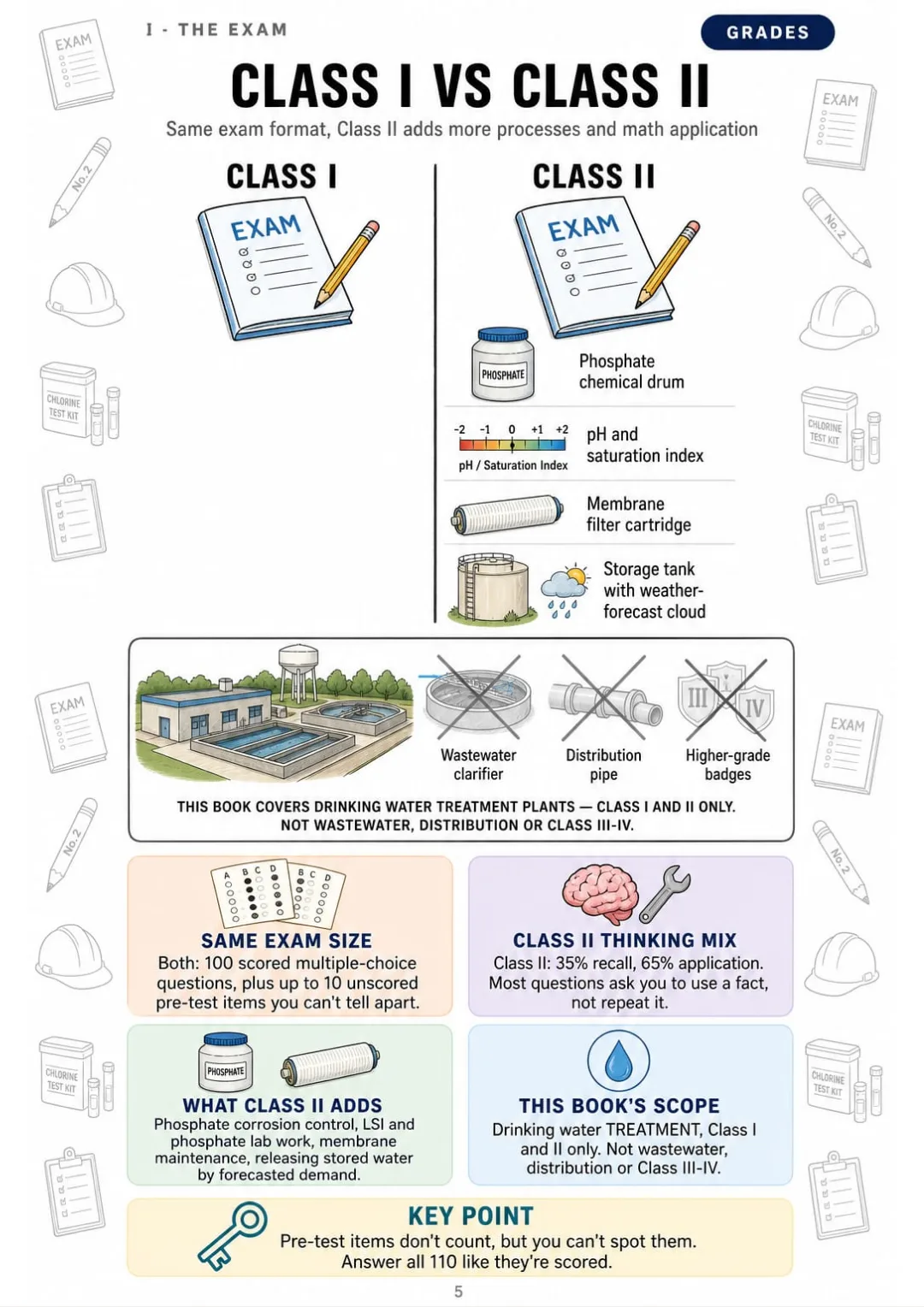
Class I vs Class II: 100 scored questions each, Class II is 65% application
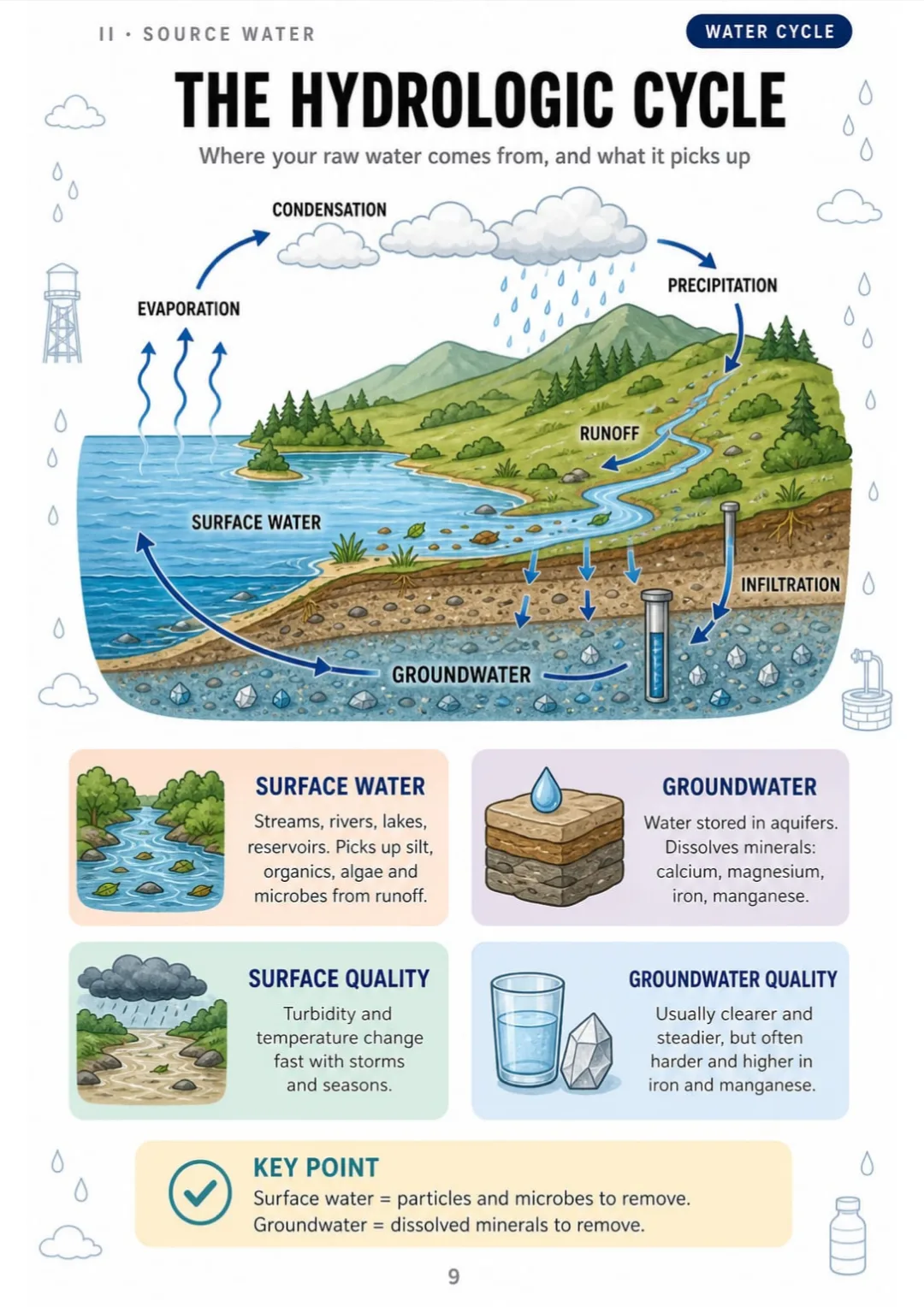
The water cycle as one drawing: runoff brings silt and organics, infiltration brings dissolved minerals.
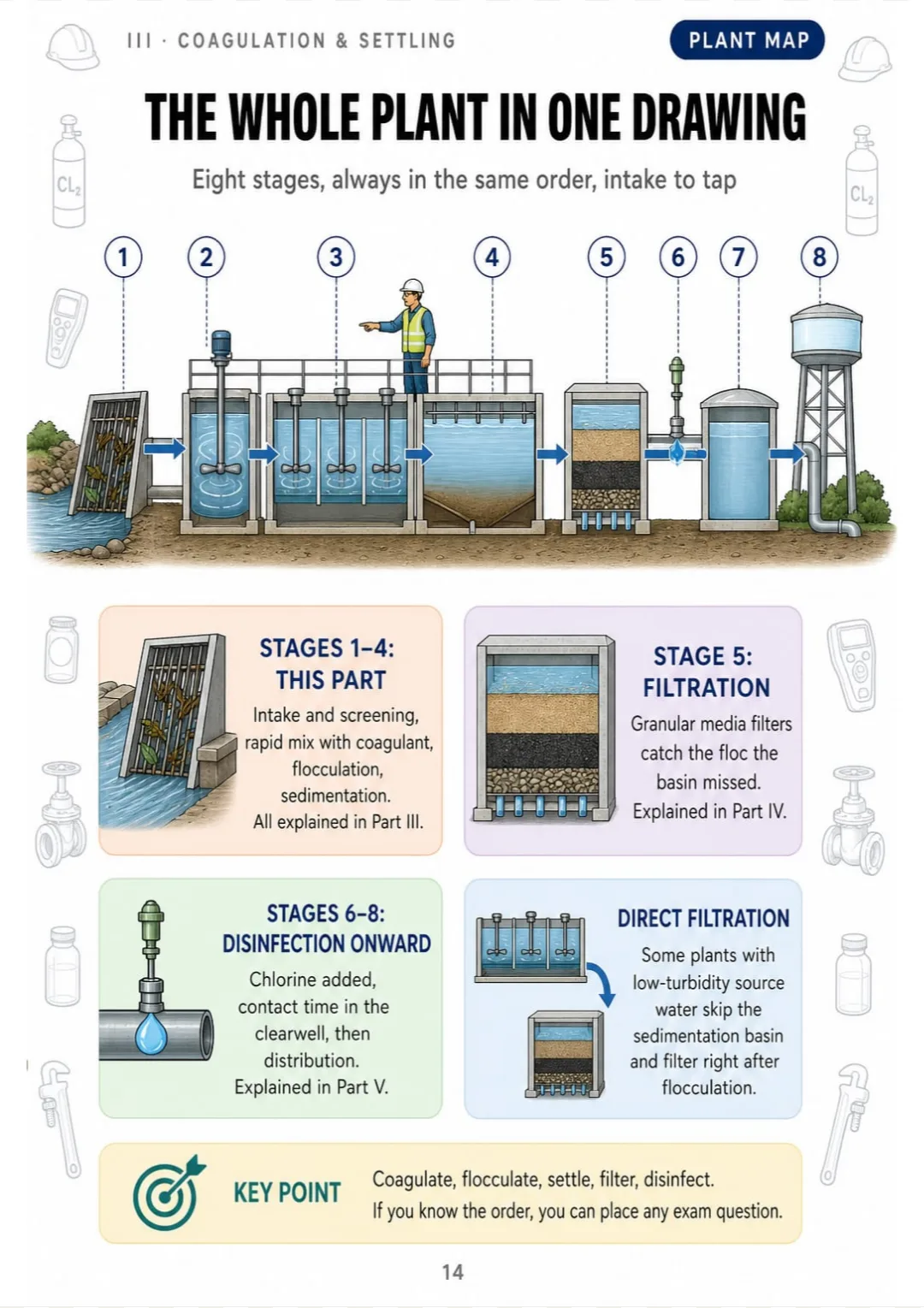
Intake → rapid mix → floc → settling → filters → chlorine → clearwell → distribution
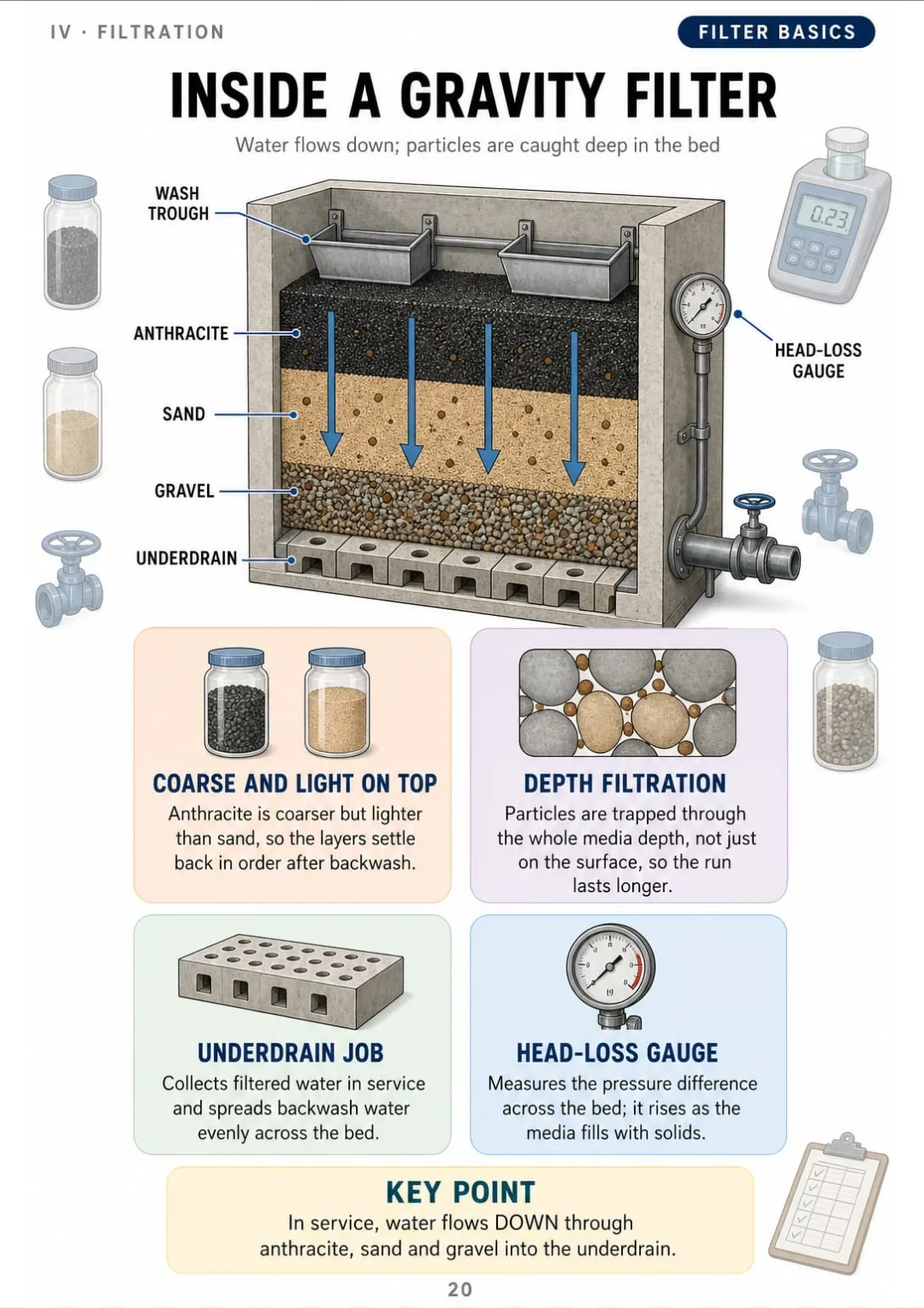
Anthracite over sand over gravel: water flows down, solids caught in depth
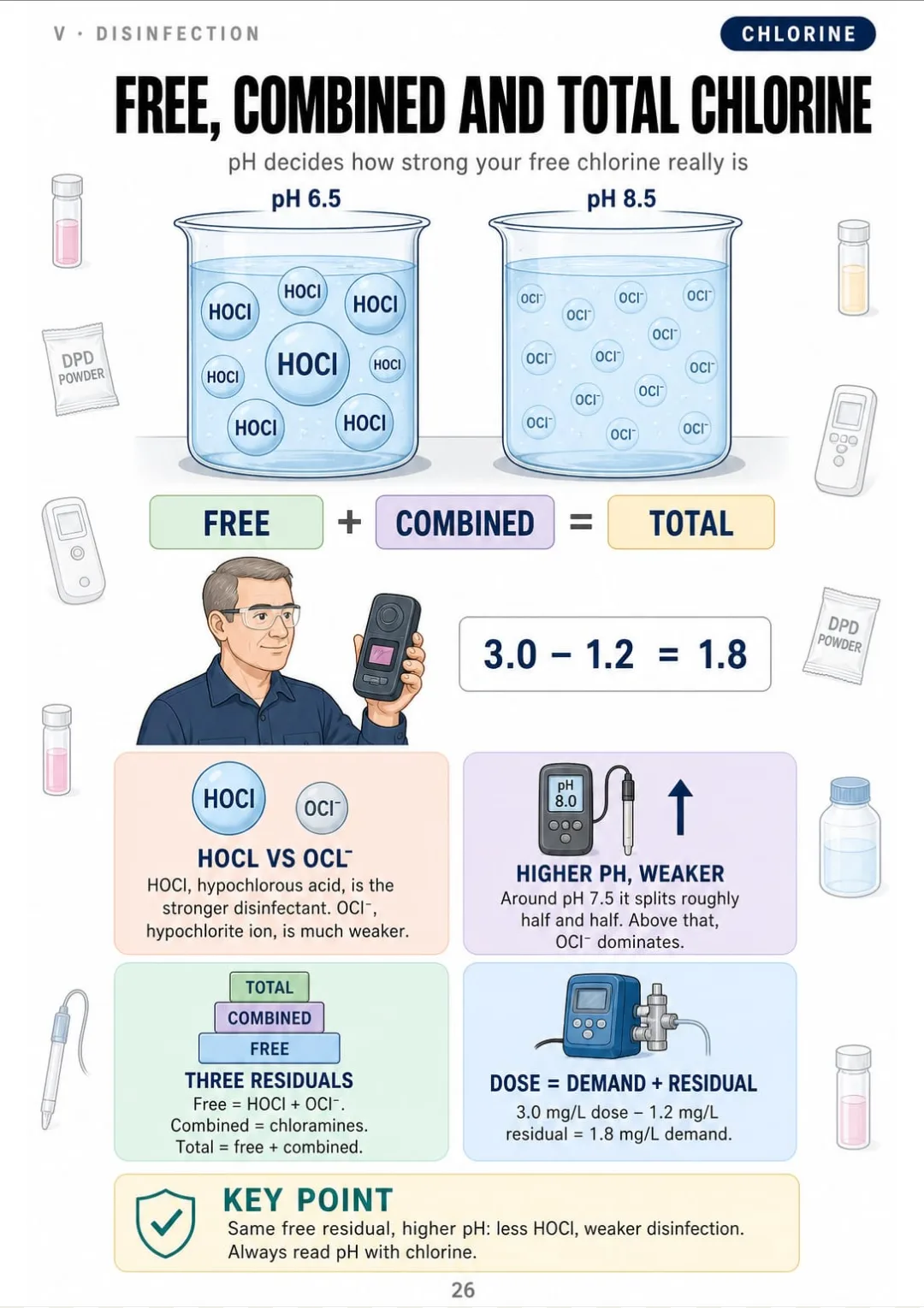
HOCl vs OCl⁻ by pH, and dose 3.0 − residual 1.2 = demand 1.8 mg/L
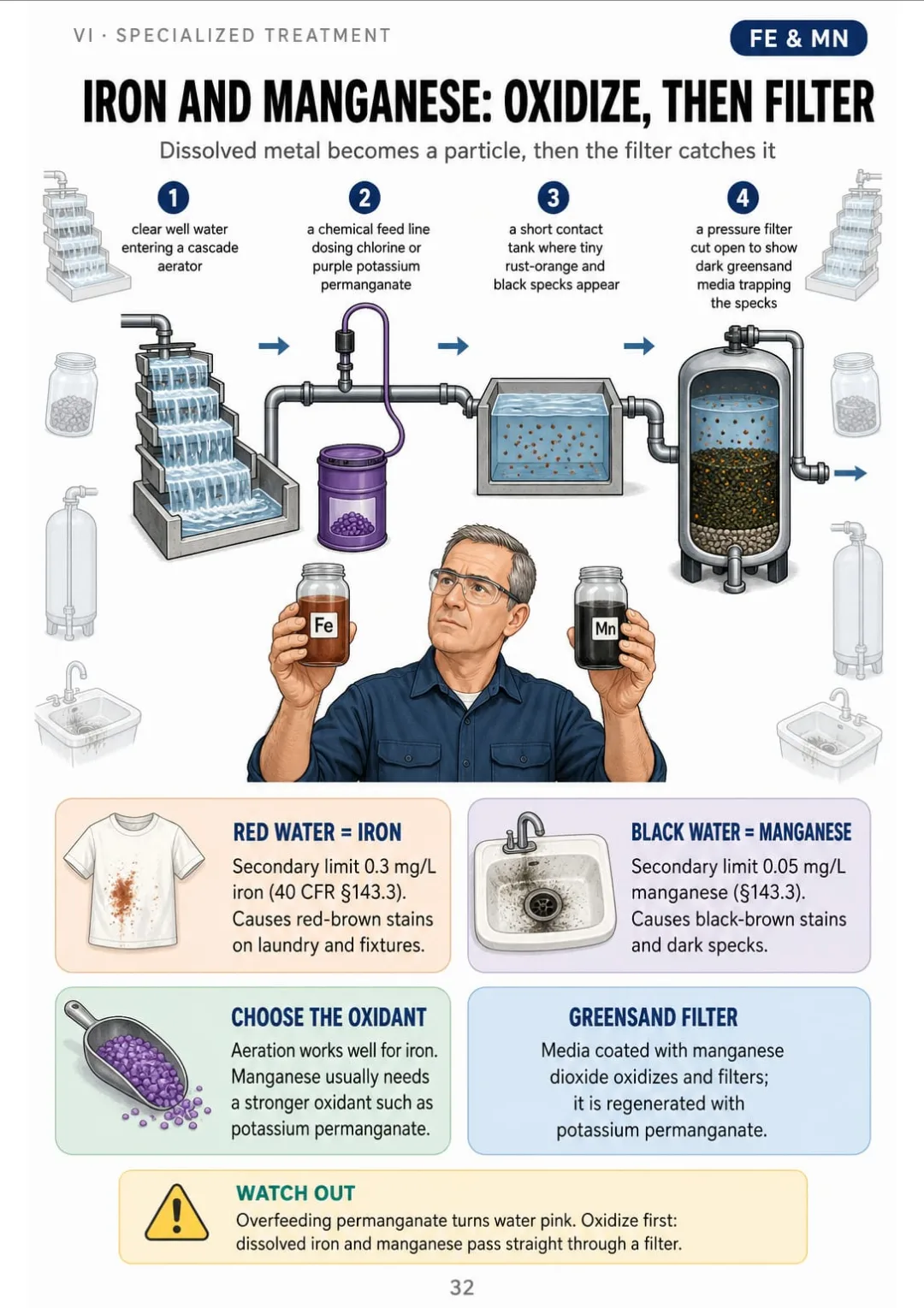
Iron 0.3 mg/L, manganese 0.05 mg/L (§143.3): oxidize, then filter
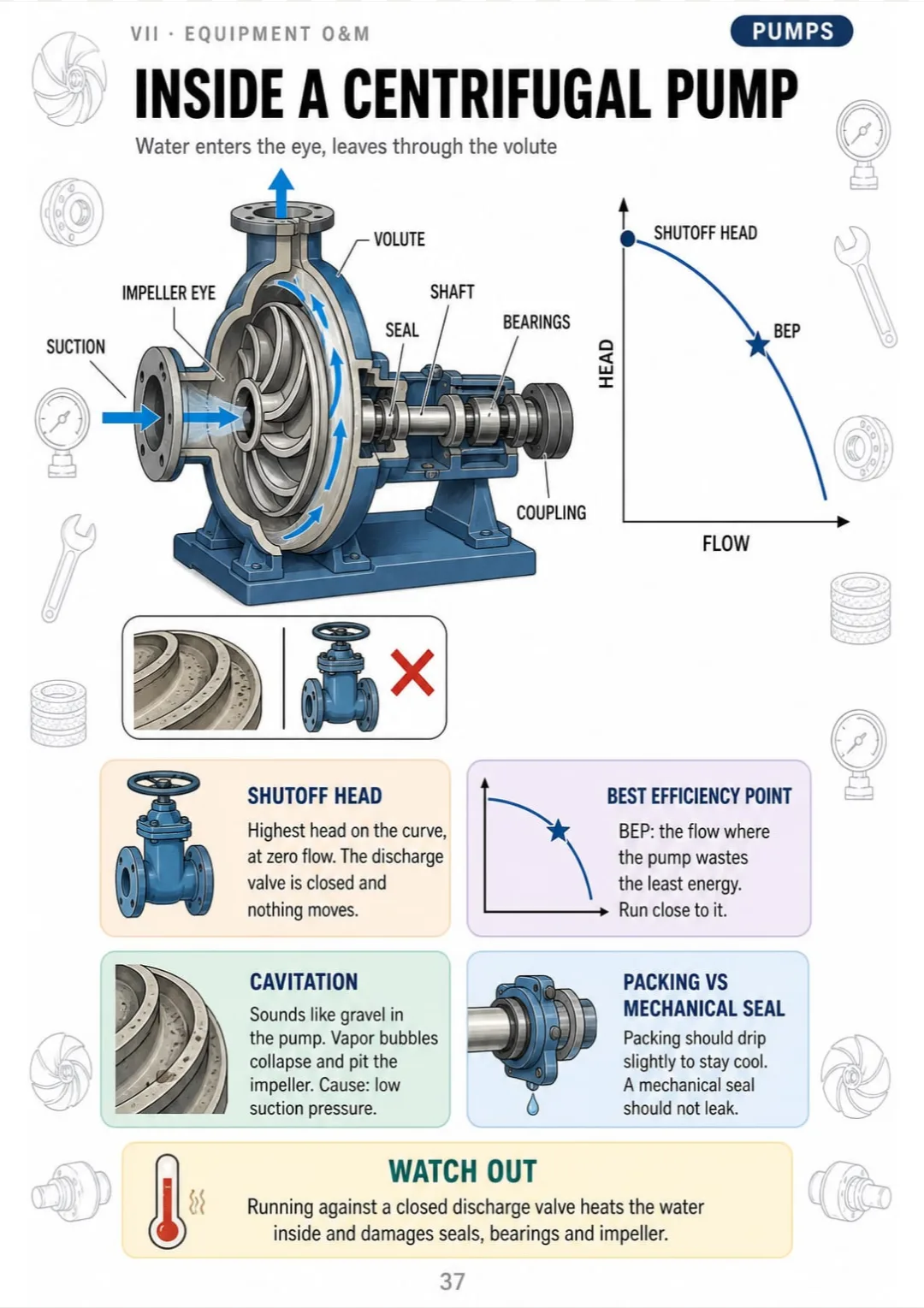
Pump cutaway from suction to volute, plus shutoff head, BEP and cavitation on one page
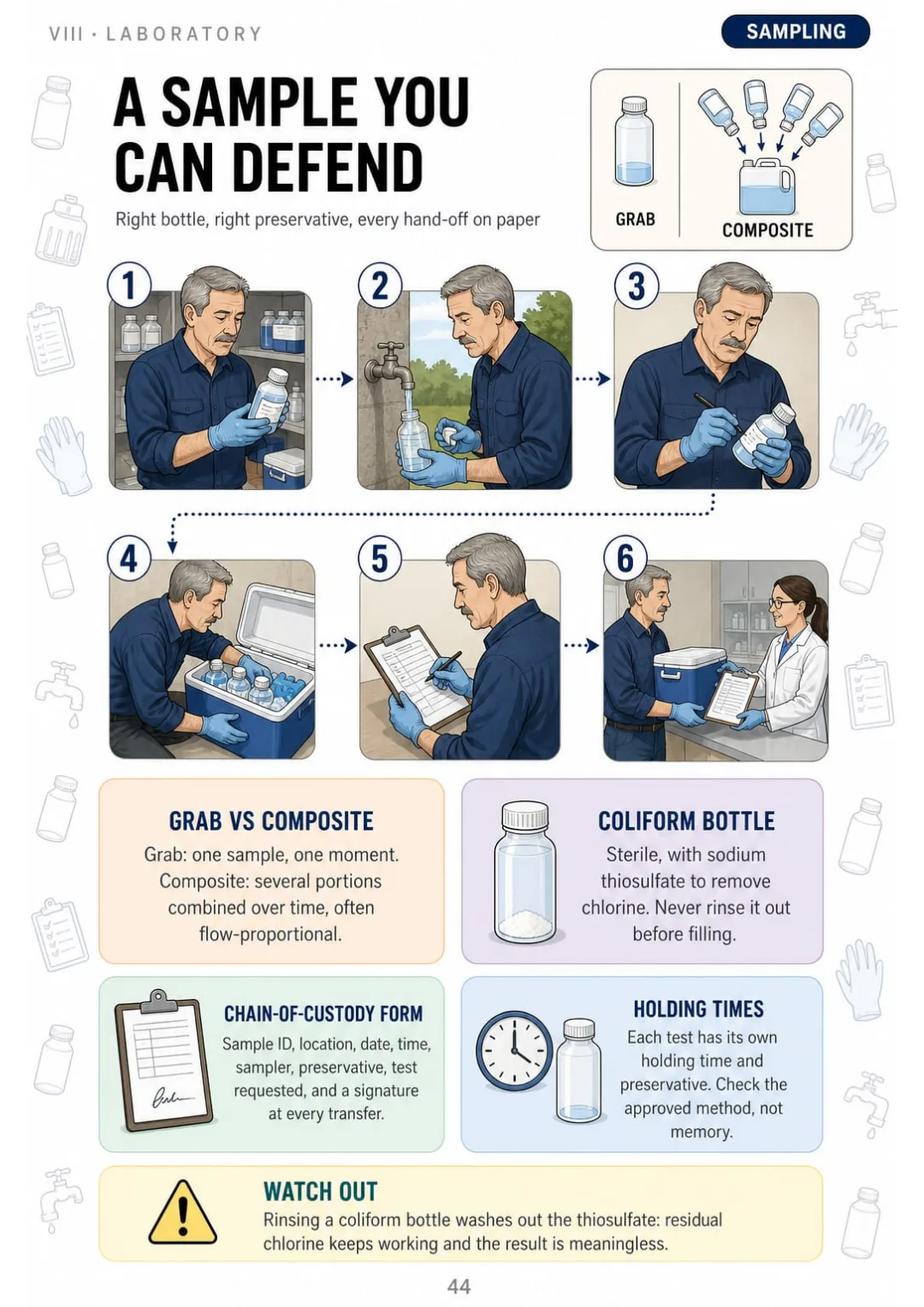
Grab vs composite, the thiosulfate bottle you never rinse, and a chain-of-custody form line by line

Swipe to see more →

These are real pages from the book. The table of contents is the full one: 11 parts and 62 topics.

It's Not That You Have a Bad Memory. It's That Nobody Put It in Order for You.

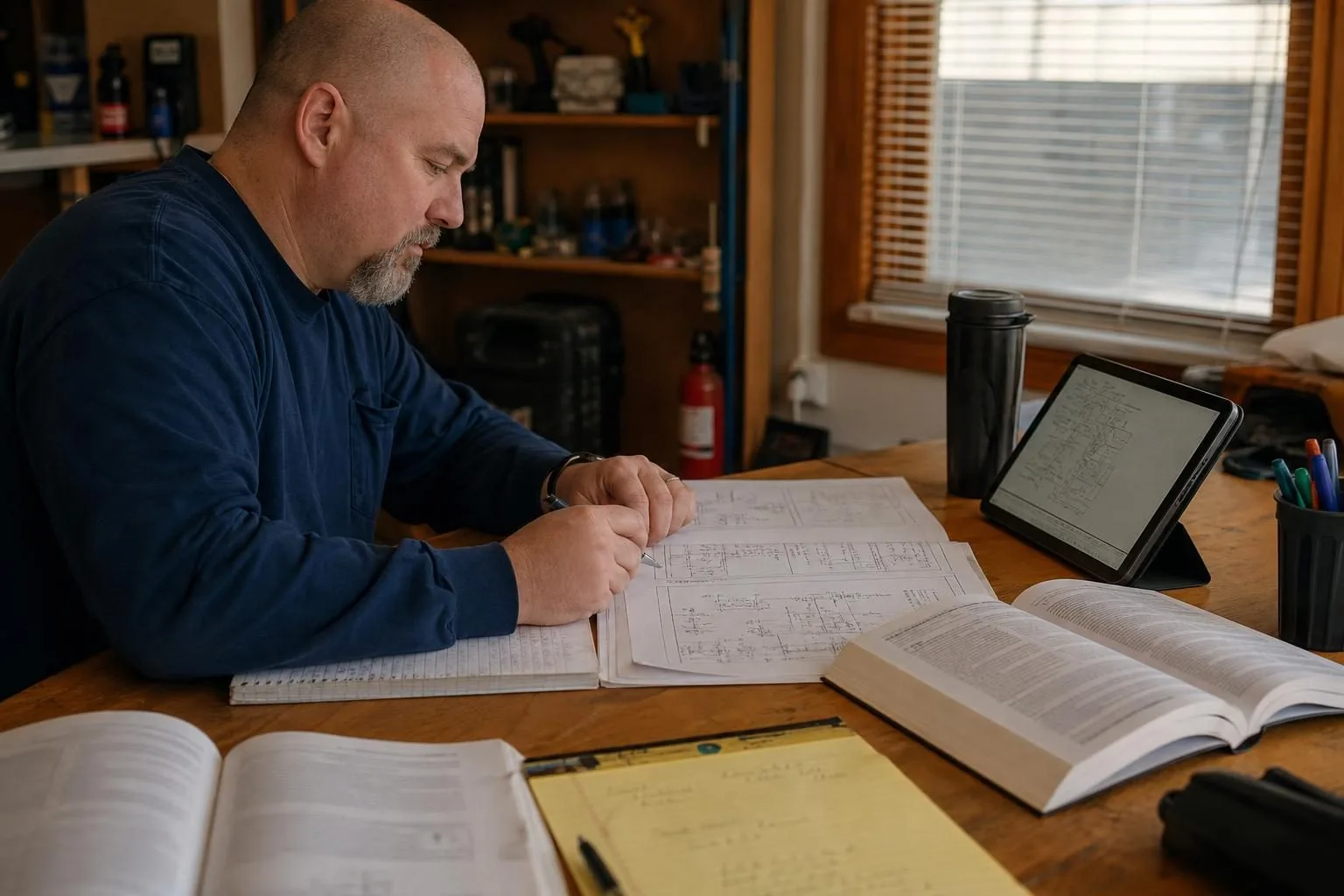
You've read the treatment train chapter three times. You close the manual...

...and you're not sure anymore if rapid mix comes before floc, or where the chlorine goes. It was just lines of text.

Intake → rapid mix → floc → settling → filters → chlorine → clearwell → distribution

Here the whole plant is one drawing, left to right: intake, rapid mix, floc, settling, filters, chlorine, clearwell and distribution.

And on the pages around it, every process gets its own: the jar test, the gravity filter, breakpoint chlorination, the centrifugal pump and the sample bottle.

First you understand why it's done that way. Then the order sticks on its own.

SEE THE DIFFERENCE

Stop memorizing processes you can't picture:

THIS
  • Page after page of dense text
  • Processes without a single drawing
  • On the exam, you don't know where to start
The hydrologic cycle describes the continuous movement of water among the atmosphere, the land surface and subsurface formations. Atmospheric vapor condenses and returns as precipitation, a portion of which becomes surface runoff entering streams, lakes and reservoirs, transporting suspended sediments, organic matter and microorganisms. The remaining portion infiltrates the soil and percolates into aquifers, where prolonged contact with geologic materials results in the dissolution of minerals, thereby determining the characteristic differences in quality between surface water and groundwater sources.
FOR THIS
  • Every process drawn
  • One topic per page, with the rules in boxes
  • You remember it because you've seen it
The water cycle as one drawing: runoff brings silt and organics, infiltration brings dissolved minerals.
CONTENTS

Take a Look at the 11 Parts and 62 Topics

The exam, source water, coagulation and settling, filtration, disinfection, specialized treatment, equipment, the lab, regulations and safety, water math and a final review: 66 pages, all drawn

IThe Water Treatment Operator Exam · pp. 5-8
  1. Operator Grades: Class I vs Class II
  2. WPI (ABC) Exams vs State Exams
  3. Content Areas and Question Counts
  4. Using the Formula/Conversion Table
IISource Water Characteristics · pp. 9-13
  1. The Hydrologic Cycle and Water Sources
  2. Surface Water, Reservoirs and Intakes
  3. Wells, Aquifers and Drawdown
  4. Source Water Contaminants and Protection
  5. Hardness, Alkalinity and pH Basics
IIICoagulation, Flocculation and Settling · pp. 14-19
  1. The Conventional Treatment Train
  2. Screening, Pretreatment and Aeration
  3. Coagulants and Rapid Mix
  4. The Jar Test Step by Step
  5. Flocculation Basins and Floc Formation
  6. Sedimentation, Tube Settlers and Sludge
IVFiltration · pp. 20-25
  1. How Granular Media Filters Work
  2. Filter Runs, Head Loss and Breakthrough
  3. Backwashing and Surface Wash
  4. Turbidity Limits and Filter Performance
  5. Membrane, Slow Sand and Pressure Filters
  6. Residuals and Backwash Water Handling
VDisinfection · pp. 26-31
  1. Chlorine Chemistry: Free and Combined
  2. Breakpoint Chlorination
  3. CT and Log Inactivation
  4. Chloramines, Ozone, UV and Chlorine Dioxide
  5. Disinfection Byproducts and MRDLs
  6. Hypochlorite and Gas Chlorine Feed Systems
VISpecialized Treatment Processes · pp. 32-36
  1. Iron and Manganese Removal
  2. Corrosion Control and the LSI
  3. Softening and Ion Exchange
  4. Fluoridation
  5. Taste, Odor and Algae Control
VIIEquipment Operation and Maintenance · pp. 37-43
  1. Centrifugal Pumps and Pump Curves
  2. Motors, Horsepower and Efficiency
  3. Valves and Backflow Prevention
  4. Chemical Feed Pumps and Calibration
  5. Meters, Gauges and Online Analyzers
  6. SCADA, PLCs and HMI
  7. Generators, Compressors and Work Orders
VIIILaboratory Analysis · pp. 44-49
  1. Sampling, Preservation and Chain of Custody
  2. pH, Alkalinity and Hardness Tests
  3. Turbidity and Chlorine Residual Tests
  4. Coliform and E. coli Testing
  5. Iron, Manganese, Color and Odor Tests
  6. Lab Safety and Instrument Calibration
IXRegulations, Safety and Administration · pp. 50-56
  1. The Safe Drinking Water Act and MCLs
  2. Surface Water Treatment Rules
  3. Revised Total Coliform Rule
  4. Lead and Copper Rule
  5. Public Notification and Records
  6. Chlorine and Chemical Handling Safety
  7. Confined Space, Lockout/Tagout, Emergencies
XWater Math Step by Step · pp. 57-63
  1. Units, Conversions and Constants
  2. Area, Volume and Detention Time
  3. Flow, Velocity and Pressure
  4. The Pounds Formula
  5. Chemical Feed Pump Settings
  6. Filter Loading and Backwash Rates
  7. Dilution, Blending and Percent Strength
XIFinal Review · pp. 64-66
  1. Frequent Mix-Ups
  2. Formula Table Drills
  3. Exam Day Checklist

What If Every Topic Fit on a Single Page?

Picture this:

Instead of rereading half a page on backwashing without being able to see it...

...you open the page and find the same gravity filter drawn twice: water flowing down in service, and up in backwash.

HOCl vs OCl⁻ by pH, and dose 3.0 − residual 1.2 = demand 1.8 mg/L

And coagulation, the jar test, breakpoint chlorination, CT and the pounds formula become drawings and tables you can read at a glance.

You stop repeating and start understanding.

That's exactly what The Water Treatment Operator Sketchbook does. It's not “just another manual.” It's 11 parts and 62 drawn topics, and at the end the frequent mix-ups, formula table drills and an exam day checklist. Because what your brain sees in order, it remembers.

Because what your brain sees organized, it remembers.

Here Is What You Get with The Water Treatment Operator Sketchbook:

Ipp. 5-8

The Water Treatment Operator Exam

Know exactly what you're walking into: Class I vs Class II, WPI (ABC) exams vs state exams, the content areas and question counts, and how to use the formula/conversion table.

IIpp. 9-13

Source Water Characteristics

The water cycle, surface water and intakes, wells and drawdown, source water contaminants and protection, and hardness, alkalinity and pH basics.

IIIpp. 14-19

Coagulation, Flocculation and Settling

The conventional treatment train, screening and aeration, coagulants and rapid mix, the jar test step by step, floc formation, and sedimentation, tube settlers and sludge.

IVpp. 20-25

Filtration

How granular media filters work, filter runs and head loss, backwash and surface wash, turbidity limits, membrane, slow sand and pressure filters, and backwash water handling.

Vpp. 26-31

Disinfection

Free and combined chlorine, breakpoint chlorination, CT and log inactivation, chloramines, ozone, UV and chlorine dioxide, DBPs and MRDLs, and hypochlorite and gas feed systems.

VIpp. 32-36

Specialized Treatment Processes

Iron and manganese removal, corrosion control and the LSI, softening and ion exchange, fluoridation, and taste, odor and algae control.

VIIpp. 37-43

Equipment Operation and Maintenance

Centrifugal pumps and pump curves, motors and horsepower, valves and backflow prevention, feed pump calibration, meters and analyzers, SCADA, and generators and work orders.

VIIIpp. 44-49

Laboratory Analysis

Sampling and chain of custody, pH, alkalinity and hardness tests, turbidity and chlorine residual, coliform and E. coli, iron, manganese, color and odor, and lab safety.

IXpp. 50-56

Regulations, Safety and Administration

The Safe Drinking Water Act and MCLs, the surface water treatment rules, the Revised Total Coliform Rule, lead and copper, public notification, chemical safety, confined space and lockout/tagout.

Xpp. 57-63

Water Math Step by Step

Units and constants, area, volume and detention time, flow and pressure, the pounds formula, feed pump settings, filter loading and backwash rates, and dilution, all in the same 4 steps.

XIpp. 64-66

Final Review

The most frequent mix-ups, formula table drills and an exam day checklist.

At the end of the book: Frequent mix-ups, formula table drills and an exam day checklist.
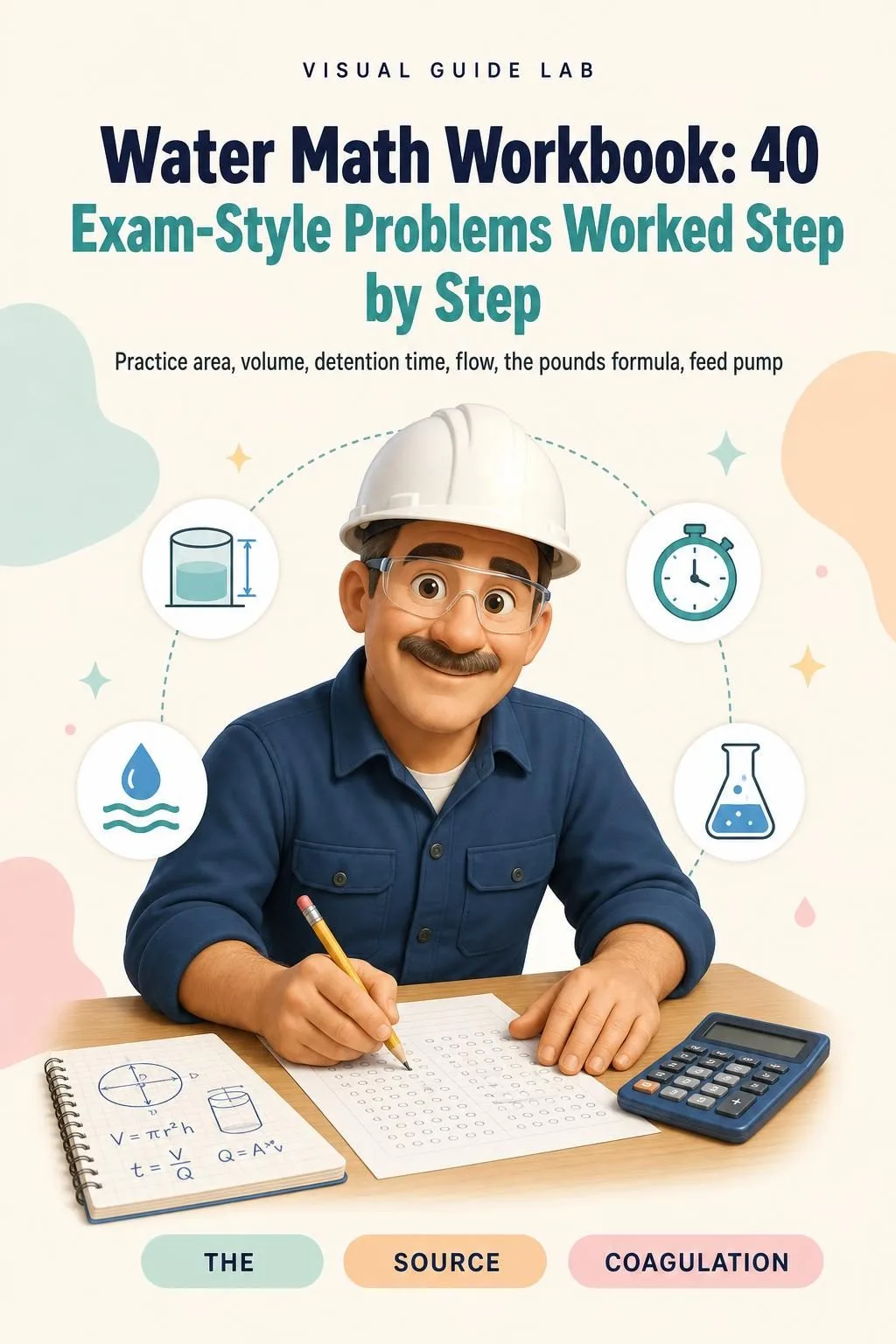
And That Is Not All: 2 More Books, Free

Water Math Workbook: 40 Exam-Style Problems Worked Step by Step

BONUS 1: «Water Math Workbook: 40 Exam-Style Problems Worked Step by Step»

Value on its own: US$ 17.90

Practice area, volume, detention time, flow, the pounds formula, feed pump settings, filter loading and dilution until you solve them the same way every time.

250 Water Treatment Terms on Cards

BONUS 2: «250 Water Treatment Terms on Cards»

Value on its own: US$ 14.90

Review the vocabulary in short sessions: the term on the front, a one-line definition and a tiny sketch on the back, ready to print.

The Water Treatment Operator Sketchbook + 2 Free Books

  • The Water Treatment Operator Sketchbook: 66 illustrated pagesUS$ 63
  • BONUS 1: Water Math Workbook: 40 Exam-Style Problems Worked Step by StepUS$ 17.90
  • BONUS 2: 250 Water Treatment Terms on CardsUS$ 14.90
  • High-resolution PDF to printIncluded
Total value US$ 95.80
YOUR PRICE:
US$ 27
You save US$ 68.80
YES, I WANT THE WATER TREATMENT OPERATOR SKETCHBOOK FOR US$ 27

📄 This is a digital PDF book sent to your email: nothing is printed or shipped.

Secure purchaseEncrypted payment30-day guarantee

PDF by email: The Water Treatment Operator Sketchbook reaches your inbox as a PDF, and the two free books come by email too. One-time payment, no installments or hidden costs.

Is This Book for You?

You're new to water treatment

You're new to water treatment

You're coming from another line of work and the CSUS manual reads like a wall of text. Here you see the plant first, from intake to clearwell, one drawing at a time.

Your exam date is coming up

Your exam date is coming up

A review of every Class I-II content area, one topic per page, plus water math solved the same way every time: data, units, formula, result.

You already work at the plant

You already work at the plant

You run the filters and log the residuals every shift. Now you see them on paper, drawn, to go from Class I to Class II and review before your shift.

To Sum Up: Here Is What You Get

US$ 95.80US$ 27
YES, I WANT THE WATER TREATMENT OPERATOR SKETCHBOOK FOR US$ 27

📄 This is a digital PDF book sent to your email: nothing is printed or shipped.

30DAYS
GUARANTEE

30-Day Guarantee

30-day guarantee: tell us what didn't work and we'll refund 100%.

You have 30 days to try The Water Treatment Operator Sketchbook and the two free books. If it doesn't work for you, tell us what didn't work and we'll refund 100% of what you paid. One-time payment, no subscriptions.

Frequently Asked Questions

How do I get the material?

You'll get The Water Treatment Operator Sketchbook as a high-resolution PDF by email, at the address you enter at checkout, to read on your phone or print. The two free books, Water Math Workbook and 250 Water Treatment Terms on Cards, come by email too.

Is it a monthly or a one-time payment?

One-time payment of US$ 27. No installments, no subscription.

Who is it for?

For operators in training, plant staff going from Class I to Class II, people changing careers and anyone retaking the exam. Each page starts with the drawing, so it works if you're new, and then goes to the operator detail and the math, so it works if you already run the plant. It covers drinking water treatment Class I-II only: not wastewater, not distribution. Check the table of contents above to see every topic.

What sources is it based on?

On the WPI (formerly ABC) Need-to-Know Criteria for Water Treatment Class I and II (2025) and the WPI Formula/Conversion Table (2024), the current eCFR text of 40 CFR Parts 141 and 143, epa.gov, and the California State Water Board Expected Range of Knowledge (Rev. 4/2020). Every MCL is cited with its 40 CFR section. Lead is shown with both values: 15 ppb in the rule as codified on July 1, 2020, and 0.010 mg/L, with compliance no later than November 1, 2027.

Is it official material?

No. It's not affiliated with or endorsed by WPI, ABC, EPA or any state program, and it doesn't reproduce exam questions. Many states use the WPI (ABC) Class I-II exams, and the book follows their Need-to-Know Criteria and formula table. California builds its own T1/T2 exam with its own formula sheet, and the book also follows the California Expected Range of Knowledge. Check your state's program to confirm which exam and formula sheet you'll get.

Does it replace my training course?

No. It's a visual study aid: it doesn't give a certificate, CEUs or training hours. It doesn't replace state-approved training, on-the-job training, your plant's SOPs or your supervisor's instructions.

Are the practice questions the ones on the exam?

No. The 40 problems in the Water Math Workbook, the formula table drills in Part 11 and the optional practice sets offered at checkout are all written for this book. They're not official exam questions: they're there to help you practice.

Can I print it?

Yes. The PDF is high resolution, so you can print the whole book or just the pages you want to keep on hand at the plant.

What if I don't like it?

You have a 30-day guarantee: tell us what didn't work and we'll refund 100%.

One Last Thing Before You Decide...

You don't have to reread the same page hoping it sticks this time.

You don't have to memorize processes you can't picture.

And you definitely don't have to walk into the exam not knowing where to start.

There's an easier way. And it's one click away. Now it's your turn.

One-time payment: US$ 27 · Guarantee: 30 days · PDF by email

YES, I WANT THE WATER TREATMENT OPERATOR SKETCHBOOK FOR US$ 27

📄 This is a digital PDF book sent to your email: nothing is printed or shipped.